Buy toolsforentrepreneur.eu ?
We are moving the project
toolsforentrepreneur.eu .
Are you interested in purchasing the domain
toolsforentrepreneur.eu ?
domain@kv-gmbh.de · 0541-91531010
Buy toolsforentrepreneur.eu ?
From when does assets count as exempt assets?
Assets are considered exempt assets when they meet specific criteria set by the government or relevant authorities. These criteria may include the type of asset, its value, and the purpose for which it is held. Exempt assets are typically protected from being seized or liquidated in certain situations, such as bankruptcy or legal proceedings. It is important to understand the rules and regulations governing exempt assets to ensure proper protection and planning for financial security. **
What is the difference between fixed assets and current assets?
Fixed assets are long-term assets that a company owns and uses to generate revenue, such as buildings, machinery, and equipment. These assets are not easily converted into cash and are expected to provide benefits to the company for more than one year. On the other hand, current assets are short-term assets that can be easily converted into cash within one year, such as cash, accounts receivable, and inventory. Current assets are used to support the day-to-day operations of a business and are essential for its liquidity and short-term financial health. **


Similar search terms for Assets
Top-Angebote
Products related to Assets:
-
HPE Installation & Startup Service - installation / configuration - for P/N 614167R-B21The Electronic HP Care Pack Services (e-Care Pack) capability allows you to order, receive, update, and activate a wide range of valuable HP Care Pack Services over the Internet. Administered through the HP Services Network (CSN), it is a fast and simple process that enables immediate registration and service activation. Choose HP Installation and Startup Service when you need to: have HP develop a custom configuration; cost-effectively obtain specialized expertise for a complex, one-time task;270,99 £*Shipping: 0,00 £Secure redirect to the provider
-
Juggernaut Publication Ankur Warikoo Collection – 2 Book Set Do Epic Shit & Get Epic Shit Done Self-Help, Success & Personal GrowthBuild better habits, make smarter decisions, and unlock your potential with the Ankur Warikoo Collection – 2 Book Set by entrepreneur, content creator, and bestselling author Ankur Warikoo. This inspiring collection includes: Do Epic Shit Get Epic Shit Done Do Epic Shit shares thought-provoking lessons on success, failure, money, habits, relationships, entrepreneurship, and self-awareness through concise, easy-to-read reflections. Get Epic Shit Done takes a practical approach, presenting answers to common life questions and encouraging readers to turn inspiration into action with clear, actionable advice. Whether you're a student, entrepreneur, young professional, or anyone seeking personal growth, this two-book collection offers valuable insights to help you develop confidence, improve productivity, and create lasting positive change. Why Readers Love This Collection: Includes 2 bestselling books by Ankur Warikoo Practical advice on success, habits, money, and mindset Inspires action through relatable real-life lessons Easy-to-read format with actionable insights Ideal for students, entrepreneurs, professionals, and aspiring leaders A motivating and practical collection, the Ankur Warikoo 2 Book Set is perfect for anyone looking to build better habits, think differently, and achieve personal and professional success.9,50 £*Shipping: 2,99 £Secure redirect to the provider



-
What is the difference between net assets and operating assets?
Net assets refer to the total assets of a company minus its total liabilities, representing the company's equity or ownership value. On the other hand, operating assets are the assets that a company uses in its day-to-day operations to generate revenue. Operating assets are a subset of net assets and include items such as inventory, equipment, and accounts receivable. In summary, net assets represent the overall financial position of a company, while operating assets specifically pertain to the assets used in the company's core business activities. **
-
What is the difference between current assets and fixed assets?
Current assets are assets that are expected to be converted into cash or used up within one year, such as cash, accounts receivable, and inventory. Fixed assets, on the other hand, are long-term assets that are not expected to be converted into cash within one year, such as property, plant, and equipment. In summary, current assets are short-term assets that are expected to be used up or converted into cash within one year, while fixed assets are long-term assets that are used to generate income over a longer period of time. **
-
How is equity, debt capital, current assets, and fixed assets combined?
Equity, debt capital, current assets, and fixed assets are combined on a company's balance sheet. Equity represents the ownership interest of the shareholders, while debt capital represents the funds borrowed by the company. Current assets, such as cash, inventory, and accounts receivable, are combined with fixed assets, such as property, plant, and equipment, to represent the total assets of the company. These components are combined to provide a snapshot of the company's financial position and to show how the company has financed its operations and investments. **
-
What are brand assets?
Brand assets are the elements that contribute to the overall value and recognition of a brand. These can include tangible assets such as logos, slogans, and packaging, as well as intangible assets like brand reputation, customer loyalty, and brand associations. Brand assets help to differentiate a brand from its competitors, build brand awareness, and create a strong brand identity in the minds of consumers. They are essential for establishing a brand's presence in the market and fostering long-term relationships with customers. **

What are special assets?
Special assets refer to unique or high-value assets that require special attention and management due to their distinct characteristics or significance. These assets may include rare collectibles, high-end real estate, valuable intellectual property, or unique investment opportunities. Special assets often require specialized expertise and strategic planning to maximize their value and mitigate risks. Proper management of special assets is essential to ensure their preservation and to capitalize on their potential for long-term growth and financial success. **
What are fixed assets?
Fixed assets are long-term tangible assets that are used in the production of goods and services and are not intended for sale. These assets are essential for the operation of a business and are expected to provide benefits for more than one year. Examples of fixed assets include buildings, machinery, equipment, land, and vehicles. Fixed assets are recorded on the balance sheet and are typically depreciated over their useful life to reflect their gradual consumption or obsolescence. **
Top-Angebote
Products related to Assets:
-
Plata Publishing FAKE: Fake Money, Fake Teachers, Fake Assets & Rich Dad Poor Dad By Robert T. Kiyosaki 2 Books Collection SetFAKE: Fake Money, Fake Teachers, Fake Assets & Rich Dad Poor Dad By Robert T. Kiyosaki 2 Books Collection Set: FAKE: Fake Money, Fake Teachers, Fake Assets: In FAKE: Fake Money, Fake Teachers, Fake Assets, Robert delivers insights and answers that help ordinary people―who probably haven’t had a lot of financial education―determine what’s ‘real’ and relevant to their financial lives. Every day we are bombarded with news reports and information and opinions… How do we decipher fact from fiction? How do we differentiate between truth and lies? And determine what’s real… from what isn’t? Kiyosaki believes that it starts with education, financial education designed to make us smarter with our money―and able to fight what’s fake and use what isn’t to secure our financial future. Rich Dad Poor Dad: Rich Dad Poor Dad is Robert's story of growing up with two dads — his real father and the father of his best friend, his rich dad — and the ways in which both men shaped his thoughts about money and investing. The book explodes the myth that you need to earn a high income to be rich and explains the difference between working for money and having your money work for you.12,95 £*Shipping: 2,99 £Secure redirect to the provider
-
HPE Installation & Startup Service - installation / configurationThe Electronic HP Care Pack Services (e-Care Pack) capability allows you to order, receive, update, and activate a wide range of valuable HP Care Pack Services over the Internet. Administered through the HP Services Network (CSN), it is a fast and simple process that enables immediate registration and service activation. The installation and start-up service delivers expert support for this increasingly critical element of your eCommerce environment. This expert service quickly gets the storage2175,99 £*Shipping: 0,00 £Secure redirect to the provider
-
From when does assets count as exempt assets?
Assets are considered exempt assets when they meet specific criteria set by the government or relevant authorities. These criteria may include the type of asset, its value, and the purpose for which it is held. Exempt assets are typically protected from being seized or liquidated in certain situations, such as bankruptcy or legal proceedings. It is important to understand the rules and regulations governing exempt assets to ensure proper protection and planning for financial security. **
-
What is the difference between fixed assets and current assets?
Fixed assets are long-term assets that a company owns and uses to generate revenue, such as buildings, machinery, and equipment. These assets are not easily converted into cash and are expected to provide benefits to the company for more than one year. On the other hand, current assets are short-term assets that can be easily converted into cash within one year, such as cash, accounts receivable, and inventory. Current assets are used to support the day-to-day operations of a business and are essential for its liquidity and short-term financial health. **
-
What is the difference between net assets and operating assets?
Net assets refer to the total assets of a company minus its total liabilities, representing the company's equity or ownership value. On the other hand, operating assets are the assets that a company uses in its day-to-day operations to generate revenue. Operating assets are a subset of net assets and include items such as inventory, equipment, and accounts receivable. In summary, net assets represent the overall financial position of a company, while operating assets specifically pertain to the assets used in the company's core business activities. **
-
What is the difference between current assets and fixed assets?
Current assets are assets that are expected to be converted into cash or used up within one year, such as cash, accounts receivable, and inventory. Fixed assets, on the other hand, are long-term assets that are not expected to be converted into cash within one year, such as property, plant, and equipment. In summary, current assets are short-term assets that are expected to be used up or converted into cash within one year, while fixed assets are long-term assets that are used to generate income over a longer period of time. **
Similar search terms for Assets
-
HPE Installation & Startup Service - installation / configuration - for P/N 614167R-B21The Electronic HP Care Pack Services (e-Care Pack) capability allows you to order, receive, update, and activate a wide range of valuable HP Care Pack Services over the Internet. Administered through the HP Services Network (CSN), it is a fast and simple process that enables immediate registration and service activation. Choose HP Installation and Startup Service when you need to: have HP develop a custom configuration; cost-effectively obtain specialized expertise for a complex, one-time task;270,99 £*Shipping: 0,00 £Secure redirect to the provider
-
Juggernaut Publication Ankur Warikoo Collection – 2 Book Set Do Epic Shit & Get Epic Shit Done Self-Help, Success & Personal GrowthBuild better habits, make smarter decisions, and unlock your potential with the Ankur Warikoo Collection – 2 Book Set by entrepreneur, content creator, and bestselling author Ankur Warikoo. This inspiring collection includes: Do Epic Shit Get Epic Shit Done Do Epic Shit shares thought-provoking lessons on success, failure, money, habits, relationships, entrepreneurship, and self-awareness through concise, easy-to-read reflections. Get Epic Shit Done takes a practical approach, presenting answers to common life questions and encouraging readers to turn inspiration into action with clear, actionable advice. Whether you're a student, entrepreneur, young professional, or anyone seeking personal growth, this two-book collection offers valuable insights to help you develop confidence, improve productivity, and create lasting positive change. Why Readers Love This Collection: Includes 2 bestselling books by Ankur Warikoo Practical advice on success, habits, money, and mindset Inspires action through relatable real-life lessons Easy-to-read format with actionable insights Ideal for students, entrepreneurs, professionals, and aspiring leaders A motivating and practical collection, the Ankur Warikoo 2 Book Set is perfect for anyone looking to build better habits, think differently, and achieve personal and professional success.9,50 £*Shipping: 2,99 £Secure redirect to the provider
-
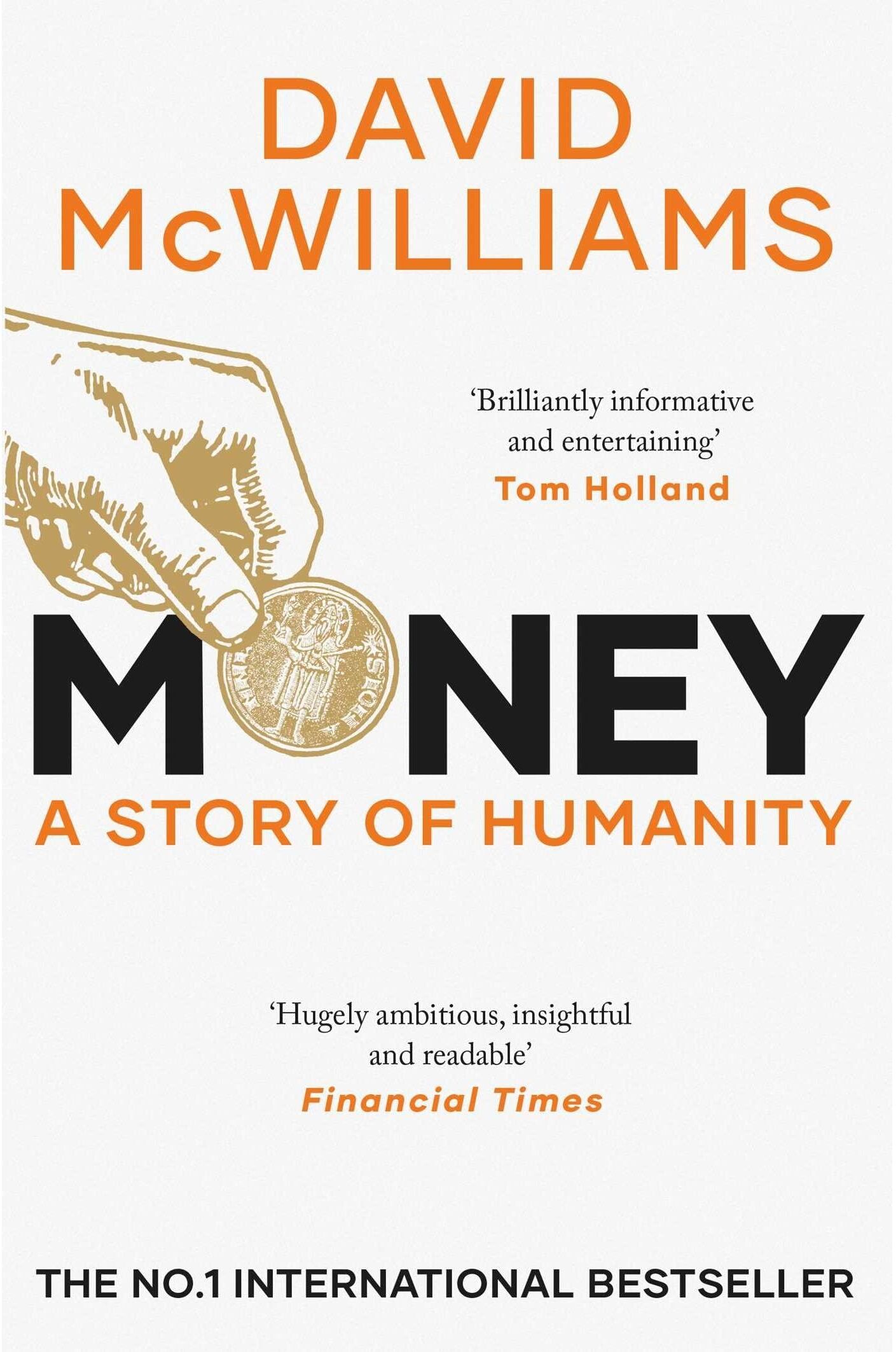
Simon & Schuster Money: A Story of Humanity by David McWilliams Economic History & Global Finance ExplainedIn Money: A Story of Humanity, renowned economist David McWilliams explores the fascinating history of money — not just as currency, but as a powerful force that has shaped human civilisation, relationships, technology, and global society. From ancient barter systems to cryptocurrency revolutions, McWilliams reveals how money reflects our values, ambitions, fears, politics, and culture.Rich with storytelling, sharp insights, and humour, this book makes complex economic ideas accessible, engaging, and deeply human. Perfect for readers who enjoy exploring how history, psychology, markets, and power intersect, Money: A Story of Humanity provides a fresh, eye-opening look at how money drives — and is driven by — human behaviour. Ideal for fans of Yuval Noah Harari, Tim Harford, Niall Ferguson, and Mary Beard.7,99 £*Shipping: 2,99 £Secure redirect to the provider
-
Classic Editions The Complete Art of War – 8 Book Hardback Box Set Sun Tzu & Ancient Chinese Military Strategy Classics Leadership, Warfare & Strategy CollectionExplore centuries of strategic thinking with The Complete Art of War – 8 Books Collection Hardback Box Set, an impressive collection of classical Chinese writings on warfare, leadership, tactics and strategy. Bringing together influential works from ancient Chinese military thought, this hardback collection includes titles such as The Art of War, Methods of the Sima, Wuzi, Wei Liaozi, Three Strategies of Huang Shigong, and Six Secret Teachings of Taigong, alongside additional works included in the eight-volume set. These enduring texts examine subjects including leadership, planning, discipline, intelligence, diplomacy, battlefield tactics and strategic decision-making. Although written in the context of ancient warfare, many of their principles have subsequently attracted readers interested in history, leadership and strategic thinking. Presented as an 8-volume hardback boxed collection, the set is ideal for readers of military history, students of classical philosophy and collectors of beautifully presented classic works. Why Readers Will Love This Collection Includes 8 hardback volumes in a collectible box set Features influential works of ancient Chinese military strategy Explores strategy, leadership, tactics and decision-making Excellent addition to military history and philosophy collections Attractive hardback format for a home or study library Ideal gift for history, strategy and classic literature enthusiasts The Complete Art of War 8 Book Collection brings together some of history's most enduring works on strategy in one impressive hardback set. Titles In This Set: Notebook Questions and Replies Three Strategies of Huang Shigong Wuzi Wei Liaozi The Methods of The Sima Six Secret Teachings of Taigong The Art of War16,99 £*Shipping: 2,99 £Secure redirect to the provider
-
How is equity, debt capital, current assets, and fixed assets combined?
Equity, debt capital, current assets, and fixed assets are combined on a company's balance sheet. Equity represents the ownership interest of the shareholders, while debt capital represents the funds borrowed by the company. Current assets, such as cash, inventory, and accounts receivable, are combined with fixed assets, such as property, plant, and equipment, to represent the total assets of the company. These components are combined to provide a snapshot of the company's financial position and to show how the company has financed its operations and investments. **
-
What are brand assets?
Brand assets are the elements that contribute to the overall value and recognition of a brand. These can include tangible assets such as logos, slogans, and packaging, as well as intangible assets like brand reputation, customer loyalty, and brand associations. Brand assets help to differentiate a brand from its competitors, build brand awareness, and create a strong brand identity in the minds of consumers. They are essential for establishing a brand's presence in the market and fostering long-term relationships with customers. **
-
What are special assets?
Special assets refer to unique or high-value assets that require special attention and management due to their distinct characteristics or significance. These assets may include rare collectibles, high-end real estate, valuable intellectual property, or unique investment opportunities. Special assets often require specialized expertise and strategic planning to maximize their value and mitigate risks. Proper management of special assets is essential to ensure their preservation and to capitalize on their potential for long-term growth and financial success. **
-
What are fixed assets?
Fixed assets are long-term tangible assets that are used in the production of goods and services and are not intended for sale. These assets are essential for the operation of a business and are expected to provide benefits for more than one year. Examples of fixed assets include buildings, machinery, equipment, land, and vehicles. Fixed assets are recorded on the balance sheet and are typically depreciated over their useful life to reflect their gradual consumption or obsolescence. **
* All prices are inclusive of VAT and, if applicable, plus shipping costs. The offer information is based on the details provided by the respective shop and is updated through automated processes. Real-time updates do not occur, so deviations can occur in individual cases. ** Note: Parts of this content were created by AI.