Buy toolsforentrepreneur.eu ?
We are moving the project
toolsforentrepreneur.eu .
Are you interested in purchasing the domain
toolsforentrepreneur.eu ?
domain@kv-gmbh.de · 0541-91531010
Buy toolsforentrepreneur.eu ?
What is the growth factor between the initial value and the final value?
The growth factor between the initial value and the final value is the ratio of the final value to the initial value. It represents how much the value has grown or increased over time. For example, if the initial value is 100 and the final value is 200, the growth factor would be 200/100 = 2, indicating that the value has doubled. This growth factor can be used to analyze the rate of growth or increase in various scenarios, such as population growth, financial investments, or business performance. **
How do I enter linear growth and exponential growth into a value table?
To enter linear growth into a value table, you would start with an initial value and then add the same amount to that value for each subsequent time period. For example, if the initial value is 5 and the growth rate is 2, then the values for each time period would be 5, 7, 9, 11, and so on. To enter exponential growth into a value table, you would start with an initial value and then multiply that value by the growth rate for each subsequent time period. For example, if the initial value is 3 and the growth rate is 2, then the values for each time period would be 3, 6, 12, 24, and so on. **

Similar search terms for Value
Top-Angebote
Products related to Value:
-
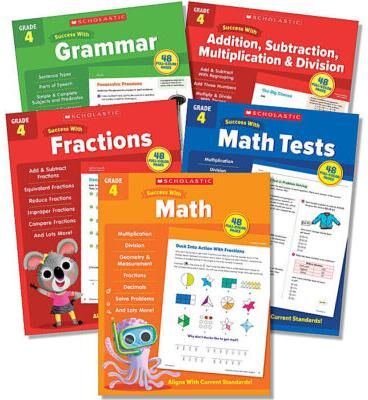
Scholastic - Children's Activity Books & Workbooks Scholastic Success With Grade 4 Value PackReinforce key skills with these exciting practice books!This set includes:Scholastic Success With Grade 4: Addition, Subtraction, Multiplication & DivisionScholastic Success With Grade 4: FractionsScholastic Success With Grade 4: GrammarScholastic...47,53 $*Shipping: 0,00 $Secure redirect to the provider
-
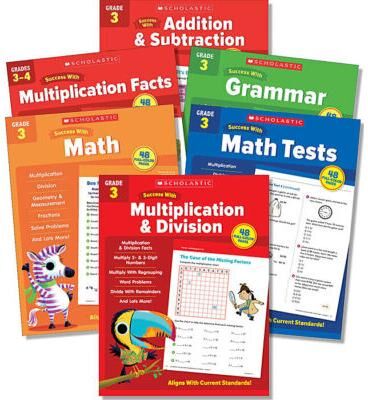
Scholastic - Children's Activity Books & Workbooks Scholastic Success With Grade 3 Value PackReinforce key skills with these exciting practice books!This set includes:Scholastic Success With Grade 3: Addition & SubtractionScholastic Success With Grade 3: GrammarScholastic Success With Grade 3: MathScholastic Success With Grade 3: Math...53,47 $*Shipping: 0,00 $Secure redirect to the provider
-
Scholastic - Children's Activity Books & Workbooks Scholastic Success With Grade 1 Value Pack (4 Books)Reinforce key skills with these exciting practice books!This set includes:Scholastic Success With Grade 1: GrammarScholastic Success With Grade 1: MathScholastic Success With Grade 1: Reading ComprehensionScholastic Success With Grade 1: Writing...22,99 $*Shipping: 0,00 $Secure redirect to the provider
-
Scholastic - Children's Activity Books & Workbooks Scholastic Success with Grade K Value Pack (4 Books)Designed for no-fuss, grab-and-go learning, these workbooks makes it easy to reinforce early learning skills-anytime, anywhere.This set includes:Scholastic Success with Addition & Subtraction: Grades K-1Scholastic Success With Grades K-2: Sight...23,99 $*Shipping: 0,00 $Secure redirect to the provider


-
What is the formula to calculate the relative growth from a negative value to a positive value?
The formula to calculate the relative growth from a negative value to a positive value is: Relative Growth = (New Value - Old Value) / |Old Value| * 100% Where: - New Value is the positive value - Old Value is the negative value - |Old Value| represents the absolute value of the negative value This formula allows you to calculate the percentage increase from a negative value to a positive value, taking into account the magnitude of the initial negative value. **
-
How do I know which value is the x-value and which value is the y-value?
In a coordinate pair (x, y), the x-value represents the horizontal position on the graph, while the y-value represents the vertical position. The x-value comes first in the pair and is always written before the y-value. When plotting a point on a graph, the x-value tells you how far to move horizontally, and the y-value tells you how far to move vertically. **
-
What is the difference between future value, present value, and net present value?
Future value is the value of an investment at a specific date in the future, taking into account the interest or return it will earn over time. Present value, on the other hand, is the current value of a future sum of money, taking into account the time value of money and discounting it back to its current value. Net present value is the difference between the present value of cash inflows and the present value of cash outflows over a specific time period, used to determine the profitability of an investment or project. In summary, future value looks at the value of an investment in the future, present value looks at the current value of future cash flows, and net present value compares the present value of cash inflows and outflows to determine the profitability of an investment. **
-
What is the value table for quadratic functions with initial value, final value, and increment?
The value table for quadratic functions with initial value, final value, and increment is a table that lists the input values, corresponding output values, and the increment between each input value. The initial value is the starting point of the function, the final value is the ending point, and the increment is the change in the input values. This table helps to organize and display the relationship between the input and output values of the quadratic function. **


How can the growth factor be determined and the final value be calculated?
The growth factor can be determined by dividing the final value by the initial value. This will give you the factor by which the value has grown. To calculate the final value, you can multiply the initial value by the growth factor. For example, if the initial value is 100 and the growth factor is 1.5, the final value would be 100 * 1.5 = 150. This method can be used to determine and calculate the growth factor and final value in various contexts, such as population growth, financial investments, or business performance. **
What is a value chain or value creation processes?
A value chain is a series of activities that a company performs in order to deliver a valuable product or service to the market. It includes all the steps involved in creating, producing, marketing, and delivering a product or service to customers. Value creation processes are the specific activities within the value chain that add value to the product or service, ultimately leading to a competitive advantage for the company. By optimizing these processes, a company can improve efficiency, reduce costs, and enhance the overall value of its offerings to customers. **
Top-Angebote
Products related to Value:
-
Scholastic Teaching Resources Scholastic Success With Grade 5 Value PackReinforce key skills with these exciting practice books!This set includes:Scholastic Success With Grade 5: Fractions & DecimalsScholastic Success With Grade 5: GrammarScholastic Success With Grade 5: MathScholastic Success With Grade 5: Math...41,59 $*Shipping: 0,00 $Secure redirect to the provider
-
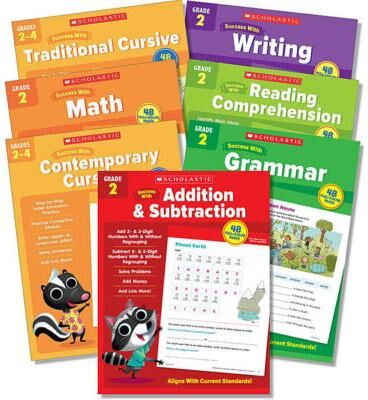
Scholastic - Children's Activity Books & Workbooks Scholastic Success With Grade 2 Value PackReinforce key skills with these exciting practice books!This set includes:Scholastic Success With Grade 2: Addition & SubtractionScholastic Success With Grade 2: GrammarScholastic Success With Grade 2: MathScholastic Success With Grade 2: Reading...41,59 $*Shipping: 0,00 $Secure redirect to the provider
-
Scholastic - Children's Activity Books & Workbooks Scholastic Success With Grade 4 Value PackReinforce key skills with these exciting practice books!This set includes:Scholastic Success With Grade 4: Addition, Subtraction, Multiplication & DivisionScholastic Success With Grade 4: FractionsScholastic Success With Grade 4: GrammarScholastic...47,53 $*Shipping: 0,00 $Secure redirect to the provider
-
Scholastic - Children's Activity Books & Workbooks Scholastic Success With Grade 3 Value PackReinforce key skills with these exciting practice books!This set includes:Scholastic Success With Grade 3: Addition & SubtractionScholastic Success With Grade 3: GrammarScholastic Success With Grade 3: MathScholastic Success With Grade 3: Math...53,47 $*Shipping: 0,00 $Secure redirect to the provider
-
What is the growth factor between the initial value and the final value?
The growth factor between the initial value and the final value is the ratio of the final value to the initial value. It represents how much the value has grown or increased over time. For example, if the initial value is 100 and the final value is 200, the growth factor would be 200/100 = 2, indicating that the value has doubled. This growth factor can be used to analyze the rate of growth or increase in various scenarios, such as population growth, financial investments, or business performance. **
-
How do I enter linear growth and exponential growth into a value table?
To enter linear growth into a value table, you would start with an initial value and then add the same amount to that value for each subsequent time period. For example, if the initial value is 5 and the growth rate is 2, then the values for each time period would be 5, 7, 9, 11, and so on. To enter exponential growth into a value table, you would start with an initial value and then multiply that value by the growth rate for each subsequent time period. For example, if the initial value is 3 and the growth rate is 2, then the values for each time period would be 3, 6, 12, 24, and so on. **
-
What is the formula to calculate the relative growth from a negative value to a positive value?
The formula to calculate the relative growth from a negative value to a positive value is: Relative Growth = (New Value - Old Value) / |Old Value| * 100% Where: - New Value is the positive value - Old Value is the negative value - |Old Value| represents the absolute value of the negative value This formula allows you to calculate the percentage increase from a negative value to a positive value, taking into account the magnitude of the initial negative value. **
-
How do I know which value is the x-value and which value is the y-value?
In a coordinate pair (x, y), the x-value represents the horizontal position on the graph, while the y-value represents the vertical position. The x-value comes first in the pair and is always written before the y-value. When plotting a point on a graph, the x-value tells you how far to move horizontally, and the y-value tells you how far to move vertically. **
Similar search terms for Value
-
Scholastic - Children's Activity Books & Workbooks Scholastic Success With Grade 1 Value Pack (4 Books)Reinforce key skills with these exciting practice books!This set includes:Scholastic Success With Grade 1: GrammarScholastic Success With Grade 1: MathScholastic Success With Grade 1: Reading ComprehensionScholastic Success With Grade 1: Writing...22,99 $*Shipping: 0,00 $Secure redirect to the provider
-
Scholastic - Children's Activity Books & Workbooks Scholastic Success with Grade K Value Pack (4 Books)Designed for no-fuss, grab-and-go learning, these workbooks makes it easy to reinforce early learning skills-anytime, anywhere.This set includes:Scholastic Success with Addition & Subtraction: Grades K-1Scholastic Success With Grades K-2: Sight...23,99 $*Shipping: 0,00 $Secure redirect to the provider
-
Piggy Value PackWelcome to the bone chilling, pulse-pounding world of PIGGY, the survival-horror game that will keep you up at night.This set includes:Piggy: InfectedPiggy: The CurePiggy: Graphic Novel #1: Permanent DetentionPiggy: The Official Guide Piggy Value Pack35,66 $*Shipping: 0,00 $Secure redirect to the provider
-
Nature Numbers Value PackIn Nature Numbers, math is beautiful, recognizable, and all around us! Highly engaging pictures of animals and nature scenes, along with cool chalk illustrations, are used to introduce basic math concepts and encourage kids to see a world of numbers...27,16 $*Shipping: 0,00 $Secure redirect to the provider
-
What is the difference between future value, present value, and net present value?
Future value is the value of an investment at a specific date in the future, taking into account the interest or return it will earn over time. Present value, on the other hand, is the current value of a future sum of money, taking into account the time value of money and discounting it back to its current value. Net present value is the difference between the present value of cash inflows and the present value of cash outflows over a specific time period, used to determine the profitability of an investment or project. In summary, future value looks at the value of an investment in the future, present value looks at the current value of future cash flows, and net present value compares the present value of cash inflows and outflows to determine the profitability of an investment. **
-
What is the value table for quadratic functions with initial value, final value, and increment?
The value table for quadratic functions with initial value, final value, and increment is a table that lists the input values, corresponding output values, and the increment between each input value. The initial value is the starting point of the function, the final value is the ending point, and the increment is the change in the input values. This table helps to organize and display the relationship between the input and output values of the quadratic function. **
-
How can the growth factor be determined and the final value be calculated?
The growth factor can be determined by dividing the final value by the initial value. This will give you the factor by which the value has grown. To calculate the final value, you can multiply the initial value by the growth factor. For example, if the initial value is 100 and the growth factor is 1.5, the final value would be 100 * 1.5 = 150. This method can be used to determine and calculate the growth factor and final value in various contexts, such as population growth, financial investments, or business performance. **
-
What is a value chain or value creation processes?
A value chain is a series of activities that a company performs in order to deliver a valuable product or service to the market. It includes all the steps involved in creating, producing, marketing, and delivering a product or service to customers. Value creation processes are the specific activities within the value chain that add value to the product or service, ultimately leading to a competitive advantage for the company. By optimizing these processes, a company can improve efficiency, reduce costs, and enhance the overall value of its offerings to customers. **
* All prices are inclusive of VAT and, if applicable, plus shipping costs. The offer information is based on the details provided by the respective shop and is updated through automated processes. Real-time updates do not occur, so deviations can occur in individual cases. ** Note: Parts of this content were created by AI.