Buy toolsforentrepreneur.eu ?
We are moving the project
toolsforentrepreneur.eu .
Are you interested in purchasing the domain
toolsforentrepreneur.eu ?
domain@kv-gmbh.de · 0541-91531010
Buy toolsforentrepreneur.eu ?
What happened in the year 1933?
In the year 1933, several significant events took place. Adolf Hitler became Chancellor of Germany, marking the beginning of the Nazi regime. The United States faced the height of the Great Depression, leading to the implementation of President Franklin D. Roosevelt's New Deal policies. Prohibition in the United States was also repealed with the ratification of the 21st Amendment, ending the nationwide ban on alcohol. **
How did religion change around 1933?
In 1933, religion underwent significant changes due to the rise of the Nazi regime in Germany. The Nazis sought to control and manipulate religious institutions to serve their political agenda, leading to the suppression of religious freedom and the persecution of religious minorities, particularly Jews. The Nazis also promoted a form of pseudo-religious worship centered around the cult of Adolf Hitler, attempting to replace traditional religious beliefs with their own ideology. These changes had a profound impact on the practice of religion in Germany and the broader European context, leading to widespread religious persecution and the erosion of religious freedom. **


Similar search terms for 1933
Top-Angebote
Products related to 1933:
-
HPE Installation & Startup Service - installation / configuration - for P/N 614167R-B21The Electronic HP Care Pack Services (e-Care Pack) capability allows you to order, receive, update, and activate a wide range of valuable HP Care Pack Services over the Internet. Administered through the HP Services Network (CSN), it is a fast and simple process that enables immediate registration and service activation. Choose HP Installation and Startup Service when you need to: have HP develop a custom configuration; cost-effectively obtain specialized expertise for a complex, one-time task;270,99 £*Shipping: 0,00 £Secure redirect to the provider
-
Simon & Schuster Money: A Story of Humanity by David McWilliams Economic History & Global Finance ExplainedIn Money: A Story of Humanity, renowned economist David McWilliams explores the fascinating history of money — not just as currency, but as a powerful force that has shaped human civilisation, relationships, technology, and global society. From ancient barter systems to cryptocurrency revolutions, McWilliams reveals how money reflects our values, ambitions, fears, politics, and culture.Rich with storytelling, sharp insights, and humour, this book makes complex economic ideas accessible, engaging, and deeply human. Perfect for readers who enjoy exploring how history, psychology, markets, and power intersect, Money: A Story of Humanity provides a fresh, eye-opening look at how money drives — and is driven by — human behaviour. Ideal for fans of Yuval Noah Harari, Tim Harford, Niall Ferguson, and Mary Beard.7,99 £*Shipping: 2,99 £Secure redirect to the provider




-
Can you describe a postcard from 1933?
A postcard from 1933 would likely feature a colorful illustration or photograph on one side, with a space for a written message and recipient's address on the other. The image might depict a popular tourist destination, landmark, or event from that time period. The message on the back would be written in cursive handwriting, possibly detailing the sender's travels or well wishes to the recipient. Overall, a postcard from 1933 would serve as a snapshot of the era's aesthetics and communication style. **
-
Was the Enabling Act of 1933 legal?
The Enabling Act of 1933 was a legal act passed by the German Reichstag that granted Chancellor Adolf Hitler the power to enact laws without the involvement of the Reichstag. However, the legality of the act is often debated due to the circumstances under which it was passed, including the intimidation and arrest of opposition members. Additionally, the act effectively allowed for the establishment of a dictatorship, which goes against democratic principles. While it may have been legal in the context of the German legal system at the time, it ultimately contributed to the erosion of democracy and the rise of the Nazi regime. **
-
How was antisemitism in Germany before 1933?
Before 1933, antisemitism in Germany was deeply ingrained in society and had a long history. Jews were often scapegoated for various social and economic problems, and were subjected to discrimination and violence. Antisemitic attitudes were present in political parties, the media, and the general population. This created a hostile environment for Jewish people and contributed to the rise of the Nazi party and the eventual implementation of anti-Jewish laws and policies. **
-
How did Hitler come to power in 1933?
Hitler came to power in 1933 through a combination of factors, including the economic turmoil in Germany following World War I, the Great Depression, and the failure of the Weimar Republic to address the country's problems effectively. Hitler and the Nazi Party capitalized on the widespread discontent by promising to restore Germany's greatness and scapegoating minority groups for the country's troubles. Through a combination of propaganda, intimidation, and political maneuvering, Hitler was able to secure enough support to be appointed Chancellor by President Hindenburg in January 1933. Once in power, Hitler quickly consolidated his control, dismantled democratic institutions, and established a totalitarian regime. **

How did the Reichstag election of 1933 go?
The Reichstag election of 1933 was a pivotal moment in German history as it was the last multi-party election before the Nazi Party consolidated power. The Nazi Party, led by Adolf Hitler, won a plurality of seats but not an outright majority. Through a combination of political maneuvering and intimidation, the Nazis were able to secure enough support to pass the Enabling Act, which effectively gave Hitler dictatorial powers. This election marked the beginning of the end of democracy in Germany and the establishment of the Nazi regime. **
What happened in Austria in the year 1933?
In 1933, Austria experienced political turmoil as the country faced economic challenges and social unrest. The ruling government struggled to maintain stability, and the rise of the Nazi party in neighboring Germany had an impact on Austrian politics. In March 1933, the Austrian Chancellor Engelbert Dollfuss dissolved the parliament and established an authoritarian regime, which eventually led to the Austrofascist dictatorship. This period marked a significant shift in Austrian politics and set the stage for the country's eventual annexation by Nazi Germany in 1938. **
Top-Angebote
Products related to 1933:
-
Old Modern Handicrafts 1933 Checker Model T Taxi CabIn 1933, a new 8-cylinder Lycoming-powered cab, the Model T, was introduced. It featured full-length running boards, traditional headlights and unusual circular inserts over its otherwise traditional hood louvers.86,49 $*Shipping: 0,00 $Secure redirect to the provider
-
HPE Installation & Startup Service - installation / configurationThe Electronic HP Care Pack Services (e-Care Pack) capability allows you to order, receive, update, and activate a wide range of valuable HP Care Pack Services over the Internet. Administered through the HP Services Network (CSN), it is a fast and simple process that enables immediate registration and service activation. The installation and start-up service delivers expert support for this increasingly critical element of your eCommerce environment. This expert service quickly gets the storage2175,99 £*Shipping: 0,00 £Secure redirect to the provider
-
What happened in the year 1933?
In the year 1933, several significant events took place. Adolf Hitler became Chancellor of Germany, marking the beginning of the Nazi regime. The United States faced the height of the Great Depression, leading to the implementation of President Franklin D. Roosevelt's New Deal policies. Prohibition in the United States was also repealed with the ratification of the 21st Amendment, ending the nationwide ban on alcohol. **
-
How did religion change around 1933?
In 1933, religion underwent significant changes due to the rise of the Nazi regime in Germany. The Nazis sought to control and manipulate religious institutions to serve their political agenda, leading to the suppression of religious freedom and the persecution of religious minorities, particularly Jews. The Nazis also promoted a form of pseudo-religious worship centered around the cult of Adolf Hitler, attempting to replace traditional religious beliefs with their own ideology. These changes had a profound impact on the practice of religion in Germany and the broader European context, leading to widespread religious persecution and the erosion of religious freedom. **
-
Can you describe a postcard from 1933?
A postcard from 1933 would likely feature a colorful illustration or photograph on one side, with a space for a written message and recipient's address on the other. The image might depict a popular tourist destination, landmark, or event from that time period. The message on the back would be written in cursive handwriting, possibly detailing the sender's travels or well wishes to the recipient. Overall, a postcard from 1933 would serve as a snapshot of the era's aesthetics and communication style. **
-
Was the Enabling Act of 1933 legal?
The Enabling Act of 1933 was a legal act passed by the German Reichstag that granted Chancellor Adolf Hitler the power to enact laws without the involvement of the Reichstag. However, the legality of the act is often debated due to the circumstances under which it was passed, including the intimidation and arrest of opposition members. Additionally, the act effectively allowed for the establishment of a dictatorship, which goes against democratic principles. While it may have been legal in the context of the German legal system at the time, it ultimately contributed to the erosion of democracy and the rise of the Nazi regime. **
Similar search terms for 1933
-
HPE Installation & Startup Service - installation / configuration - for P/N 614167R-B21The Electronic HP Care Pack Services (e-Care Pack) capability allows you to order, receive, update, and activate a wide range of valuable HP Care Pack Services over the Internet. Administered through the HP Services Network (CSN), it is a fast and simple process that enables immediate registration and service activation. Choose HP Installation and Startup Service when you need to: have HP develop a custom configuration; cost-effectively obtain specialized expertise for a complex, one-time task;270,99 £*Shipping: 0,00 £Secure redirect to the provider
-
Simon & Schuster Money: A Story of Humanity by David McWilliams Economic History & Global Finance ExplainedIn Money: A Story of Humanity, renowned economist David McWilliams explores the fascinating history of money — not just as currency, but as a powerful force that has shaped human civilisation, relationships, technology, and global society. From ancient barter systems to cryptocurrency revolutions, McWilliams reveals how money reflects our values, ambitions, fears, politics, and culture.Rich with storytelling, sharp insights, and humour, this book makes complex economic ideas accessible, engaging, and deeply human. Perfect for readers who enjoy exploring how history, psychology, markets, and power intersect, Money: A Story of Humanity provides a fresh, eye-opening look at how money drives — and is driven by — human behaviour. Ideal for fans of Yuval Noah Harari, Tim Harford, Niall Ferguson, and Mary Beard.7,99 £*Shipping: 2,99 £Secure redirect to the provider
-
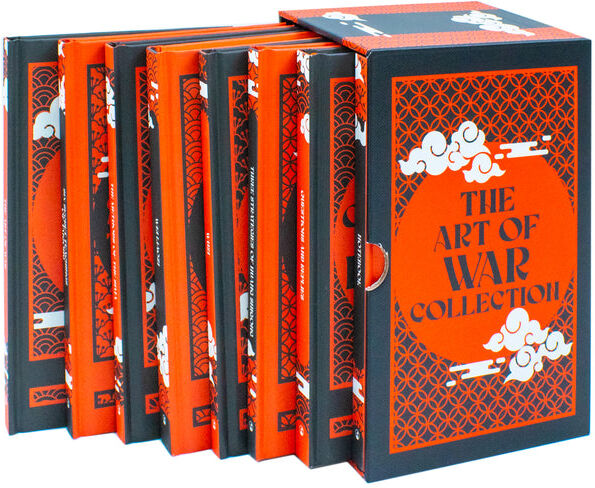
Classic Editions The Complete Art of War – 8 Book Hardback Box Set Sun Tzu & Ancient Chinese Military Strategy Classics Leadership, Warfare & Strategy CollectionExplore centuries of strategic thinking with The Complete Art of War – 8 Books Collection Hardback Box Set, an impressive collection of classical Chinese writings on warfare, leadership, tactics and strategy. Bringing together influential works from ancient Chinese military thought, this hardback collection includes titles such as The Art of War, Methods of the Sima, Wuzi, Wei Liaozi, Three Strategies of Huang Shigong, and Six Secret Teachings of Taigong, alongside additional works included in the eight-volume set. These enduring texts examine subjects including leadership, planning, discipline, intelligence, diplomacy, battlefield tactics and strategic decision-making. Although written in the context of ancient warfare, many of their principles have subsequently attracted readers interested in history, leadership and strategic thinking. Presented as an 8-volume hardback boxed collection, the set is ideal for readers of military history, students of classical philosophy and collectors of beautifully presented classic works. Why Readers Will Love This Collection Includes 8 hardback volumes in a collectible box set Features influential works of ancient Chinese military strategy Explores strategy, leadership, tactics and decision-making Excellent addition to military history and philosophy collections Attractive hardback format for a home or study library Ideal gift for history, strategy and classic literature enthusiasts The Complete Art of War 8 Book Collection brings together some of history's most enduring works on strategy in one impressive hardback set. Titles In This Set: Notebook Questions and Replies Three Strategies of Huang Shigong Wuzi Wei Liaozi The Methods of The Sima Six Secret Teachings of Taigong The Art of War16,99 £*Shipping: 2,99 £Secure redirect to the provider
-
Multisell Products Hub Easy To Play Chess Board Game Toy, Educational Strategy Table Games Easy To Play Chess Board Game Toy, Educational Strategy Table GamesEngage Your Mind with a Classic Chess Board Game The Chess Board Game Toy is a timeless strategy game that offers endless fun for both beginners and experienced players. Designed to be easy to play, this game is perfect for improving focus,...49,97 $*Shipping: 0,00 $Secure redirect to the provider
-
How was antisemitism in Germany before 1933?
Before 1933, antisemitism in Germany was deeply ingrained in society and had a long history. Jews were often scapegoated for various social and economic problems, and were subjected to discrimination and violence. Antisemitic attitudes were present in political parties, the media, and the general population. This created a hostile environment for Jewish people and contributed to the rise of the Nazi party and the eventual implementation of anti-Jewish laws and policies. **
-
How did Hitler come to power in 1933?
Hitler came to power in 1933 through a combination of factors, including the economic turmoil in Germany following World War I, the Great Depression, and the failure of the Weimar Republic to address the country's problems effectively. Hitler and the Nazi Party capitalized on the widespread discontent by promising to restore Germany's greatness and scapegoating minority groups for the country's troubles. Through a combination of propaganda, intimidation, and political maneuvering, Hitler was able to secure enough support to be appointed Chancellor by President Hindenburg in January 1933. Once in power, Hitler quickly consolidated his control, dismantled democratic institutions, and established a totalitarian regime. **
-
How did the Reichstag election of 1933 go?
The Reichstag election of 1933 was a pivotal moment in German history as it was the last multi-party election before the Nazi Party consolidated power. The Nazi Party, led by Adolf Hitler, won a plurality of seats but not an outright majority. Through a combination of political maneuvering and intimidation, the Nazis were able to secure enough support to pass the Enabling Act, which effectively gave Hitler dictatorial powers. This election marked the beginning of the end of democracy in Germany and the establishment of the Nazi regime. **
-
What happened in Austria in the year 1933?
In 1933, Austria experienced political turmoil as the country faced economic challenges and social unrest. The ruling government struggled to maintain stability, and the rise of the Nazi party in neighboring Germany had an impact on Austrian politics. In March 1933, the Austrian Chancellor Engelbert Dollfuss dissolved the parliament and established an authoritarian regime, which eventually led to the Austrofascist dictatorship. This period marked a significant shift in Austrian politics and set the stage for the country's eventual annexation by Nazi Germany in 1938. **
* All prices are inclusive of VAT and, if applicable, plus shipping costs. The offer information is based on the details provided by the respective shop and is updated through automated processes. Real-time updates do not occur, so deviations can occur in individual cases. ** Note: Parts of this content were created by AI.